

Word-by-wordSyncAudioBible
Davar को मुफ्त आज़माएँGen.11.1
कृपया आज अपनी कलीसिया, मित्रों और परिवार के साथ एक बाइबल वचन साझा करने पर विचार करें। धन्यवाद, परमेश्वर आपको आशीष दें।
IRVHin
सारी पृथ्वी पर एक ही भाषा, और एक ही बोली थी। saaree prthvee par ek hee bhaasha, aur ek hee bolee thee. There was only one language and one dialect all over the earth.
There was only one language and one dialect all over the earth.
The Tower of Babel
There was only one language and one dialect all over the earth.
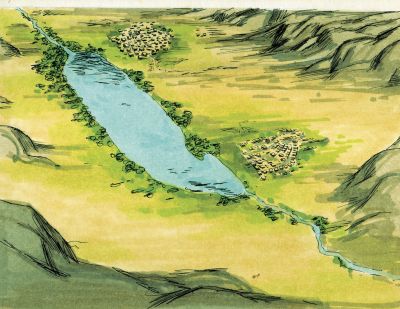
At that time, people moving towards the east found a plain in the country of Shinar and settled there.
Then they said to each other, “Come, let us make bricks and cook them thoroughly in the fire.” And instead of stone they used brick, and instead of mud mortar they used lime.
Then they said, “Come, let us build a city and a tower whose top reaches the sky, so let us make a name for ourselves, lest we have to spread across the whole earth.”
When people started building cities and towers; Then the Lord came down to see them.
And the Lord said, “What I see is that they are all of one group and they all have the same language, and they have started to do the same thing; and now nothing will be impossible for them in whatever they try to do.
So come, let us go down and cause great confusion in their language, so that they cannot understand one another's speech."
Thus Jehovah spread them from there over all the earth; And they stopped building that city.
Therefore the name of that city was Babylon; Because it was there that Jehovah created the confusion in the language of the entire earth, and from there Jehovah spread humans over the entire earth.
Genealogy from Shem to Abram
This is the genealogy of Shem. Two years after the flood, when Shem was one hundred years old, he gave birth to Arphaxad.
And Shem lived five hundred years after he became the father of Arphaxad; And more sons and daughters were born to him.
When Arpachshad was thirty-five years old, he gave birth to Shelah.
And Arphaxad lived four hundred and three years after the birth of Shelah, and he had other sons and daughters.
When Shelah was thirty years old, he fathered Eber.
And Shelah lived four hundred and three years after the birth of Eber, and begat more sons and daughters.
When Eber lived thirty-four years, he fathered Peleg.
And after the birth of Peleg, Eber lived four hundred and thirty years, and he had other sons and daughters.
When Peleg lived thirty years, he fathered Reu.
And Peleg lived after the birth of Reu two hundred and nine years, and begat more sons and daughters.
When Reu was thirty-two years old, he fathered Serug.
And after the birth of Serug, Reu lived for two hundred and seven years and begot more sons and daughters.
When Serug was thirty years old, he fathered Nahor.
And after the birth of Nahor, Serug lived two hundred more years, and begat more sons and daughters.
When Nahor lived twenty-nine years, he became the father of Terah;
And Nahor lived another hundred and nineteen years after the birth of Terah, and he had other sons and daughters.
By the time Terah was seventy years old, he fathered Abram, Nahor, and Haran.
Terah’s Descendants
These are the genealogy of Terah: Terah begot Abram, Nahor, and Haran; And Haran fathered Lot.
And Haran died before his father, in the city of Ur of the Chaldeans, which was his birthplace.
Both Abram and Nahor married. Abram's wife's name was Sarai, and Nahor's wife's name was Milka. She was the daughter of Haran, who was the father of both Milka and Ishika.
Sarai was barren; He did not have children.
And Terah took his son Abram, his grandson Lot, the son of Haran, and his daughter-in-law Sarai, his son Abram's wife, and left Ur of the Chaldeans to go to the land of Canaan. But after reaching a country called Haran, he started living there.
When Terah was two hundred and five years old, he died in the land of Haran.
क्रॉस-संदर्भ
इस वचन के लिए कोई क्रॉस-संदर्भ उपलब्ध नहीं है।